
First Public Hospital and Medical School
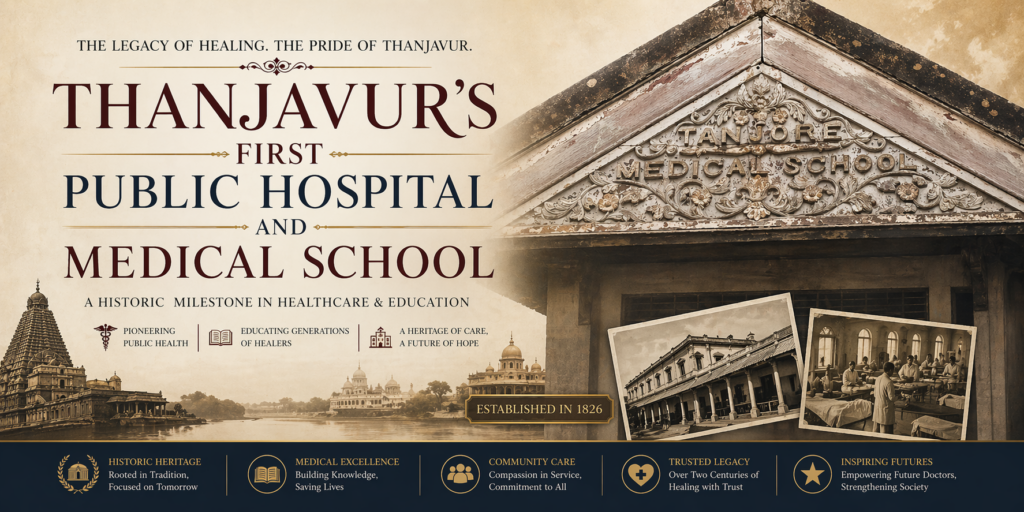
Thanjavur’s First Public Hospital and Medical School
Thanjavur, a historic city known for its rich cultural heritage, also played a significant role in the development of public healthcare in the region. The city’s first hospital, founded by the last Maratha king, Sivaji, was known as Rajas Hospital. Although the exact date of its establishment remains uncertain, this hospital paved the way for future medical advancements in the region. However, Rajas Hospital ceased operations prior to 1880, a time when a new chapter in Thanjavur’s medical history began with the inauguration of the Tanjore Raja Mirasdar Hospital (RM Hospital).
Foundation of Raja Mirasdar Hospital
Expansion and Growth
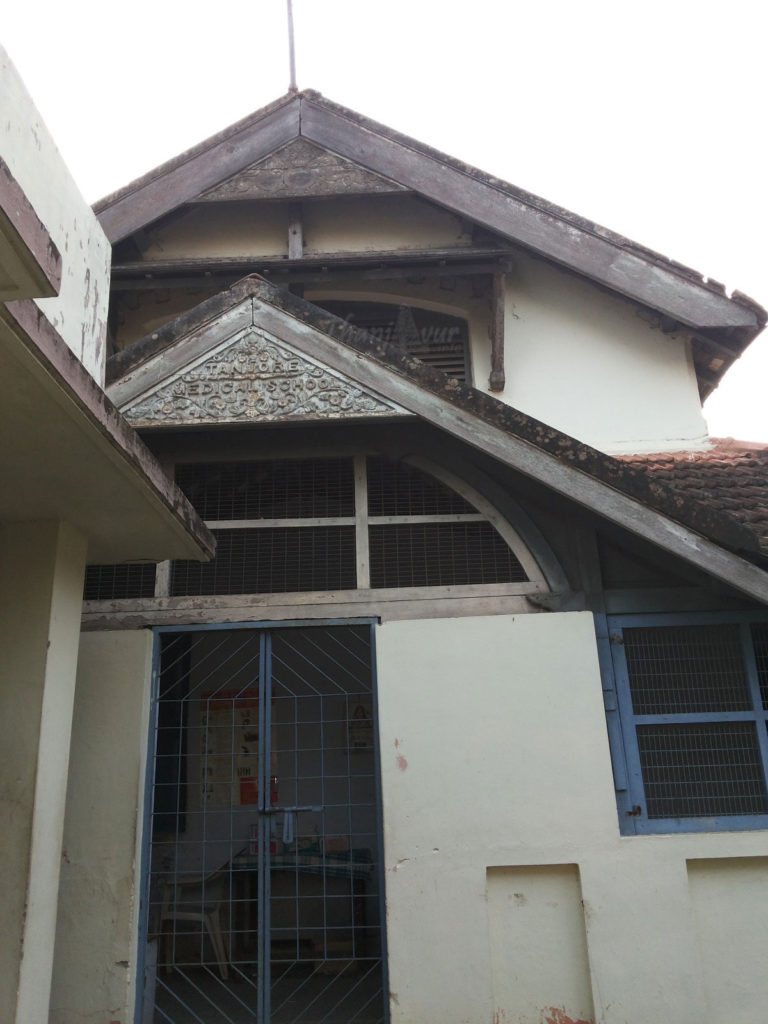
With the hospital’s success, a separate building was constructed for outpatient treatment at a cost of Rs. 7,650, inaugurated by the Governor of Madras Presidency in 1898. This marked the continued expansion of Thanjavur’s healthcare facilities
One of the early breakthroughs in public health in Thanjavur was the introduction of smallpox vaccination by the Tanjore Municipality in 1872. Despite initial public opposition, vaccination programs were eventually accepted, bolstered by the establishment of the Raja Mirasdar Hospital
To further extend healthcare services, two additional dispensaries were opened under the hospital’s purview—one in Karanthai and another in Maanombuchavadi. These were managed by hospital doctors until the 1940s, when the Tanjore Municipality appointed its own physicians: Dr. P. Narayan Rao and Dr. K. Antharaman, both of whom became beloved figures in the community. Known affectionately as “Chinna Aspathiri Doctors,” their dedication to public health left a lasting legacy.
The Tanjore Municipality also ventured into traditional medicine by opening an Ayurvedic clinic at Keelavaasal, named after Sir Mohamed Usman. However, this clinic was later closed.
Prince of Wales Medical School
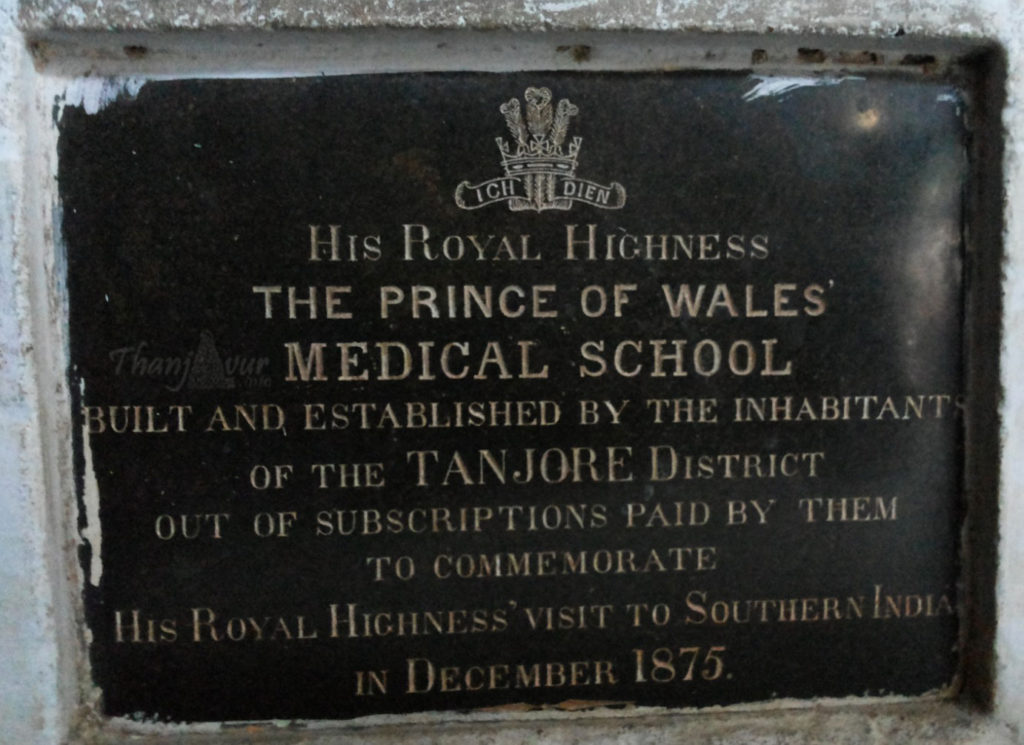
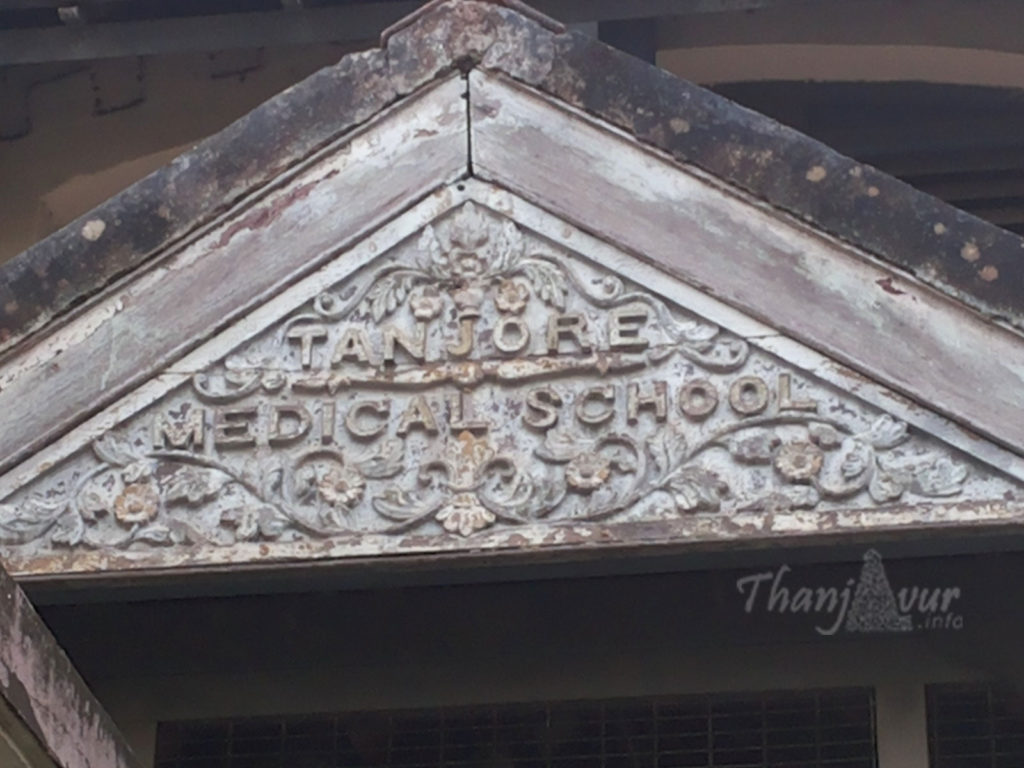
Attached to the RM Hospital was the Prince of Wales Medical School, founded in 1880 to commemorate the visit of the then Prince of Wales, later King Emperor of England. The school was funded by public subscription and was among the three prestigious medical schools in the Madras Presidency—the other two being in Madras (now Chennai) and Vizagapatnam (Visakhapatnam).
The intake of students at the Prince of Wales Medical School was limited to 15 per year, primarily from the southern districts. The school flourished until its closure in 1933. Despite its eventual shutdown, the school played a key role in shaping medical education in the region for over five decades.
The Birth of Thanjavur Medical College
A new chapter in Thanjavur’s medical history began in 1958 when the foundation stone for the Thanjavur Medical College was laid within the Raja Mirasdar Hospital premises by the President of India, Dr. Rajendra Prasad. This event was attended by notable dignitaries, including Parisutha Nadar, the M.L.A. and Chairman of Thanjavur, who is pictured garlanding the President during the ceremony.
Originally, the plan was to establish the medical college at the hospital site, but due to space constraints, it was relocated to a new location. The shift was made possible through the efforts of Chief Minister Kamarajar and the request of Parisutha Nadar M.L.A., who proposed the use of 156 acres of land that had previously been donated by the Nadar family for the establishment of Serfoji College. This land was officially gifted by Yagappa Nadar on July 3, 1956 (Gift Document No: 2327/1956).
Legacy of Parisutha Nadar and the Rotary Club of Tanjore
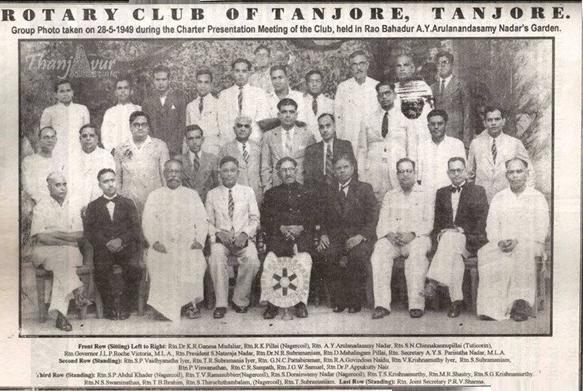
It is also worth noting that Parisutha Nadar was a key figure in the formation of the Rotary Club of Tanjore in 1949, alongside Rao Bahadur AY Arulanandaswamy Nadar. This was the first Rotary Club in Thanjavur, marking the beginning of a legacy of community service and philanthropy in the region