
Thanjavur’s 10 Oldest Schools
The Complete Chronicle of Thanjavur’s 10 Oldest Educational Institutions
A Detailed Heritage Article — All 10 Schools, Fully Expanded
Introduction: A City That Never Stopped Learning
Long before the British arrived, long before missionaries set foot on the Cauvery banks, Thanjavur was already a city of scholars. The great Chola kings who built the Brihadeeswara Temple didn’t just build in granite — they built in knowledge. Their courts hummed with poets, astronomers, physicians, musicians, and mathematicians. The pathashalaas (temple schools) attached to the Brihadeeswara complex trained hundreds of students in Sanskrit, Tamil literature, Vedic mathematics, and Agamic architecture as far back as the 11th century CE.
When the Nayak rulers followed, they patronised music, drama, and painting — turning Thanjavur into a living academy of South Indian arts. When the Marathas arrived in the 17th century, they brought with them a scholarly sophistication that led to the founding of the extraordinary Saraswathi Mahal Library — one of Asia’s oldest surviving libraries — and the world’s first secular free public school by King Serfoji II in 1803.
Then came the missionaries — Danish, British, and Catholic — who layered formal English-medium schooling onto this ancient foundation. What emerged was a city with more per-capita educational institutions of historic significance than almost anywhere else in Tamil Nadu.
This is the story of those institutions — told in full, for the first time as a single heritage chronicle.
1. St. Peters Higher Secondary School — Est. 1784 | Age: 241 Years
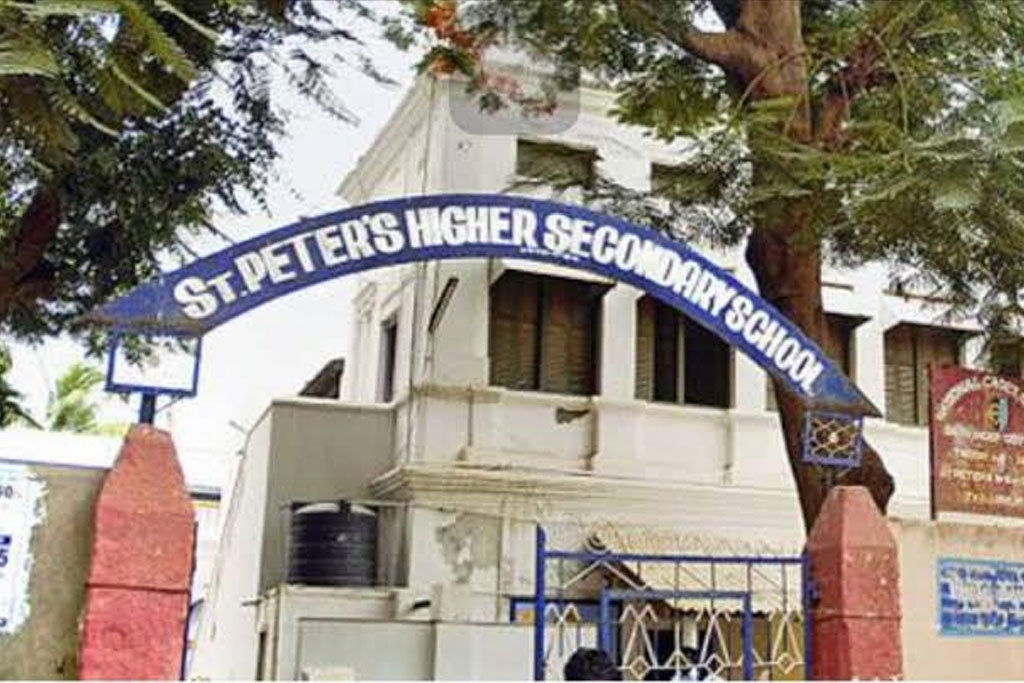
“The Patriarch of Thanjavur Education”
“First school to teach English to Indians in India.”
St. Peters Higher Secondary School stands not just as the oldest school in Thanjavur, but as one of the oldest continuously operating schools in all of India. Its founding in 1784 places it firmly in the era when Thanjavur was still a Maratha-ruled principality under Tulaja II, a full 63 years before India’s First War of Independence. It is often distinguished as the first school to teach English to Indians in the country.
The school owes its origin to the legendary Rev. Friedrich Christian Schwartz — a German-born Danish Lutheran missionary who arrived in South India in 1750 and became one of the most beloved and influential figures in the history of Thanjavur. Schwartz was no ordinary missionary. He mastered Tamil, Telugu, Sanskrit, Persian, and several European languages. He earned the deep trust of the Maratha royal family, particularly King Serfoji I, and was appointed the guardian of the young prince Serfoji II — a role he fulfilled with remarkable dedication.
Rev. Schwartz was an early pioneer in the field of education and was responsible for founding many Christian mission schools in this area to impart education to the natives. He was the first to introduce English in St. Peter’s school of Thanjavur, making this one of the oldest schools in India.
What made St. Peters revolutionary for its time was its intent: it was designed not for the children of colonial officers or European settlers, but for the native Tamil population. At a time when formal education was exclusively a privilege of the upper-caste or the wealthy, Schwartz’s school opened its doors to children across social strata. It taught English, Tamil, arithmetic, and scripture — a curriculum that was shockingly modern for 1784.
Over its 241-year journey, St. Peters has survived the fall of the Maratha kingdom, the rise and fall of British colonialism, Independence, and the complete transformation of the Tamil education system. It has produced generations of teachers, lawyers, doctors, civil servants, and artists who have gone on to shape Thanjavur and Tamil Nadu. Its campus — still standing in the heart of the city — is itself a living piece of heritage architecture.
The school’s association with the Schwartz Church, located nearby in the Thanjavur Palace gardens, adds another layer of historic depth. Schwartz used to live on the church premises, and the marble tablet inside the church — gifted by King Serfoji II — depicts the dying missionary surrounded by ministers and students from the school he founded. That tablet is, in a sense, the world’s oldest school portrait.
2. Blake Higher Secondary School (C.S.I.) — Est. 1786 | Age: 239 Years
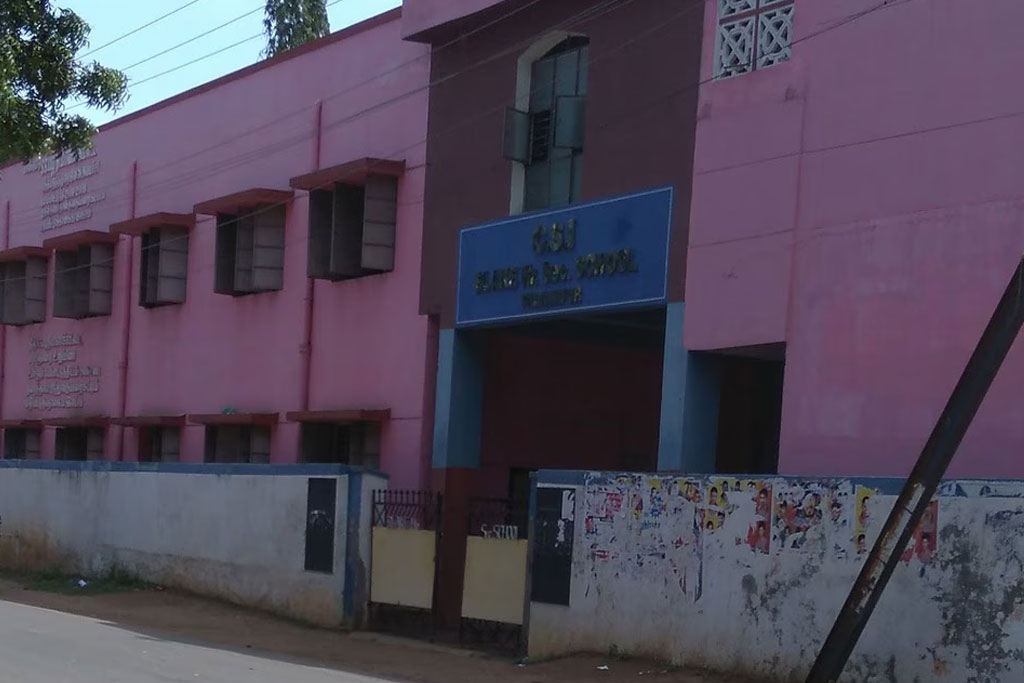
“The Protestant Pillar of the Cauvery Delta”
Founded just two years after St. Peters, the C.S.I. Blake Higher Secondary School was established in 1786 under Protestant missionary patronage, initially under the London Missionary Society and later absorbed into the Church of South India (C.S.I.) following the great church union of 1947. Named after a founding missionary patron, Blake School represents the second wave of organised English-medium education in Thanjavur — and at 239 years old, it is one of the oldest surviving schools in Tamil Nadu.
The late 18th century was a period of intense social and political change in Thanjavur. The Maratha kingdom was weakening under pressure from the British East India Company. Into this climate of transition, Protestant missionaries saw an opportunity — not merely for religious conversion, but for genuine social uplift through literacy. Blake School was established with this dual purpose: to provide rigorous English-medium education to the children of Thanjavur, and to build a bridge between the Tamil intellectual tradition and the emerging colonial economy.
The school’s curriculum in its early decades would have included English language, Tamil, arithmetic, geography, and Bible study — giving its students access to both the colonial administrative world and to the roots of their own language and literature. Many of Thanjavur’s earliest English-language writers, translators, and interpreters in the colonial civil service were products of Blake School.
For nearly two and a half centuries, Blake School has stood as one of the anchor institutions of Thanjavur’s educational ecosystem. Its alumni have spread across India and the world, carrying the mark of a school that has been shaping young minds since the age of horse-drawn carriages and oil lamps. The C.S.I. connection gives the school an additional layer of meaning — it is part of one of the world’s great ecumenical church unions, representing the coming together of Anglican, Methodist, and other Protestant traditions into a single South Indian Christian identity.
3. Serfoji’s Royal Free Public School — Est. 1803 | Age: 222 Years
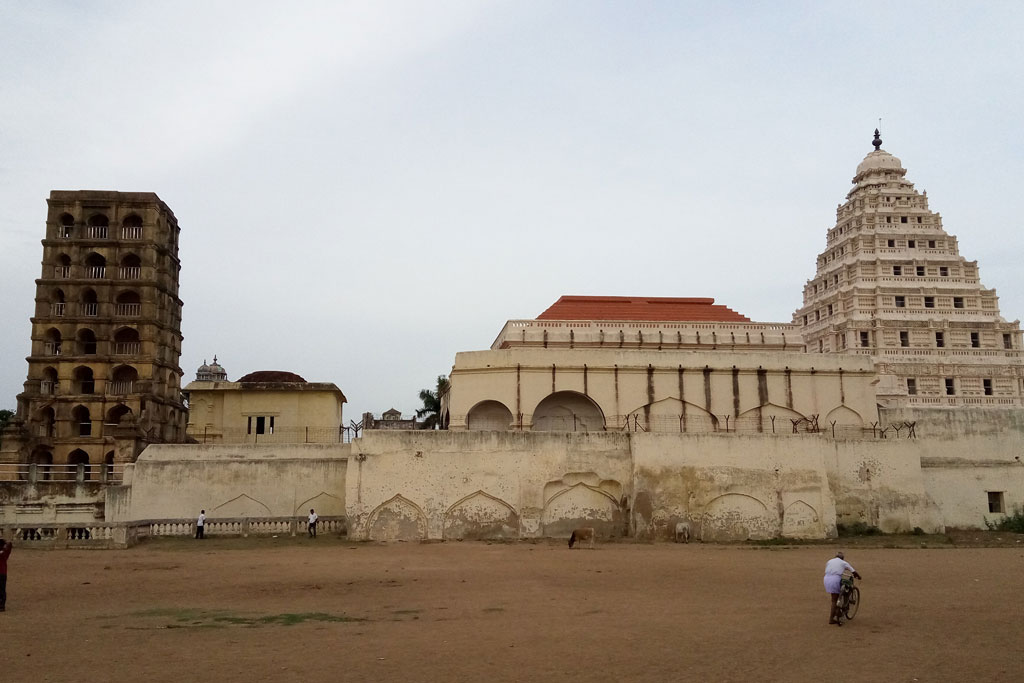
“The World’s Most Overlooked Educational Revolution”
Of all the institutions on this list, none is more remarkable — or more overlooked — than the Royal Free Public School established by King Serfoji II of the Thanjavur Maratha dynasty in 1803. This was not a missionary school. It was not a colonial government initiative. It was a Tamil king, inspired by European Enlightenment values, personally funding and running a free, secular, multi-caste school for his own subjects — 44 years before the British introduced formal mass education across India through Macaulay’s education policy.
Serfoji II was in advance of both the missionary and the colonial state — as early as 1803 in Thanjavur he had established the first modern public school for non-Christian natives.
Serfoji II was himself a product of Rev. Schwartz’s tutoring — the very school system described in the St. Peters entry above shaped the king who would go on to create something even more ambitious. Educated in English, Tamil, Sanskrit, Marathi, Telugu, Persian, Latin, and several European languages, Serfoji understood that knowledge was the true currency of the coming age.
Serfoji’s modernising projects included the establishment of a printing press — the first press for Marathi and Sanskrit — enrichment of the Saraswathi Mahal Library, and the establishment of free modern public schools run by his court, for instruction in English and the vernacular languages.
In 1822, at the free school in Muktambal Chattiram — the king’s favourite almshouse, established in 1803 — 15 teachers taught a total of 464 students of diverse castes, in two classes, in the morning and in the evening.
464 students of diverse castes, taught in the morning AND evening to accommodate working children — in 1822. This is a number and a model that would not be replicated in mainstream Indian education policy for another century.
The school at Muktambal Chattiram operated within the palace complex and drew students from all backgrounds — Brahmin, non-Brahmin, and marginalised communities alike. It taught in both English and Tamil, and its curriculum included not just literacy and arithmetic but also elements of what we might today call vocational education, aligned with Serfoji’s broader vision of a self-sufficient, educated citizenry.
This institution — now operating in reformed form within the orbit of the Thanjavur palace precinct — is in many ways the philosophical ancestor of all public education in Tamil Nadu. It deserves far more recognition than it currently receives, and its 222-year legacy is one of Thanjavur’s greatest but least-told stories.
4. Girls Christian Higher Secondary School — Est. 1856 | Age: 169 Years
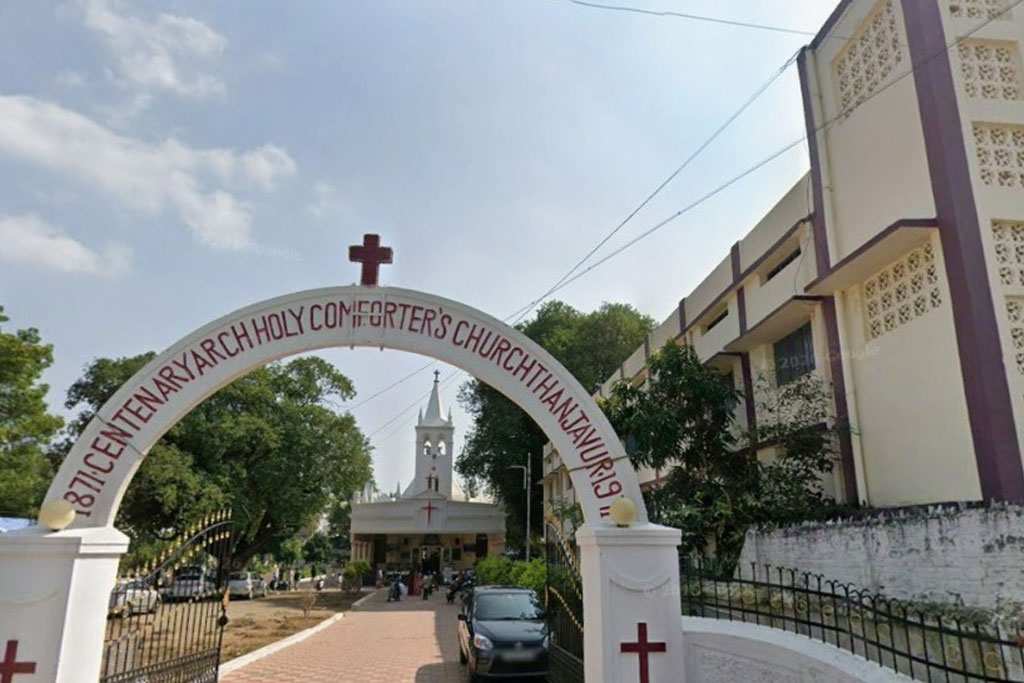
“A Revolution Disguised as a Classroom”
To truly appreciate the founding of the Girls Christian Higher Secondary School in 1856, one must understand what India looked like that year. Child marriage was near-universal. The formal education of girls was considered not just unnecessary but socially dangerous. The concept of a girl sitting in a classroom and studying English literature, mathematics, and science was, in most Indian contexts, simply unthinkable.
Into this world, a group of Christian missionaries walked into Thanjavur and opened a school — exclusively for girls. It was, without exaggeration, one of the most radical acts of social courage that 19th-century Tamil Nadu witnessed.
The school was established by Protestant missionary women associated with the Church of South India’s predecessor missions, who had identified female illiteracy as the single greatest barrier to social progress in South India. They began with a small building, a handful of students, and an enormous amount of social resistance. Families were suspicious. Community elders were hostile. But the missionaries persisted, and gradually, as the first generation of educated girls grew into educated women — mothers who taught their own children to read — the school’s value became undeniable.
Over its 169 years, the Girls Christian Higher Secondary School has been at the forefront of women’s education in Thanjavur. It was one of the first schools in the district to offer girls a full higher secondary curriculum, giving them access to board examinations and the path to college education and professional careers. Its alumni include teachers, doctors, government officers, social workers, and artists who have gone on to reshape Thanjavur’s social fabric.
The school’s founding in 1856 — the year before the 1857 uprising — places it at a pivotal moment in Indian history. While the country was on the cusp of violent political upheaval, this quiet school in Thanjavur was quietly engineering a different kind of revolution: the liberation of women’s minds.
5. Veera Ragava Higher Secondary School — Est. 1857 | Age: 168 Years
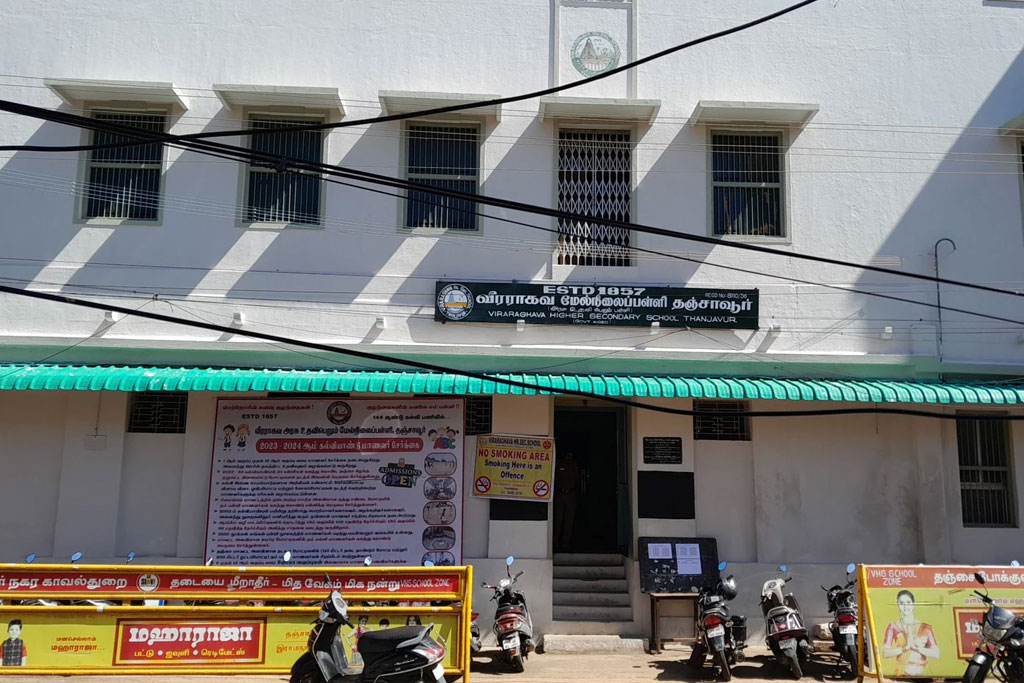
“The Indigenous Answer to Colonial Education”
The year 1857 is burned into Indian memory as the year of the First War of Independence. It is also the year in which Veera Ragava Higher Secondary School was founded in Thanjavur — a detail that is far from coincidental in its symbolic weight. While India struggled politically against colonial domination, Thanjavur’s Tamil educators and philanthropists were fighting a quieter but equally important battle: the battle to provide quality education on Indian terms, in Indian hands, for Indian children.
Veera Ragava Higher Secondary School was established with strong roots in the Hindu Tamil philanthropic tradition — a tradition of wealthy landowners, merchants, and scholars who believed that the duty of the privileged was to educate the less fortunate. The school’s name itself — Veera Ragava — invokes the divine, drawing from the Vaishnava tradition that was deeply embedded in Thanjavur’s cultural life under Maratha royal patronage.
Unlike its missionary contemporaries, Veera Ragava was primarily a Tamil-medium institution in its early decades, offering the children of Thanjavur’s middle and lower-middle classes an education rooted in their own language and cultural context. This was profoundly important at a time when English-medium education was increasingly being seen as the only path to social advancement, sometimes at the cost of Tamil language and identity.
The school offered subjects in Tamil, arithmetic, history, geography, and over time incorporated English as well — building a genuinely bilingual educational tradition that has served its students well across changing policy landscapes. For 168 years, Veera Ragava has been the school of choice for families who wanted rigorous academics without losing connection to their Tamil roots, and it remains one of the most respected Tamil-medium institutions in the Thanjavur district.
6. St. Antonys Higher Secondary School — Est. 1886 | Age: 139 Years
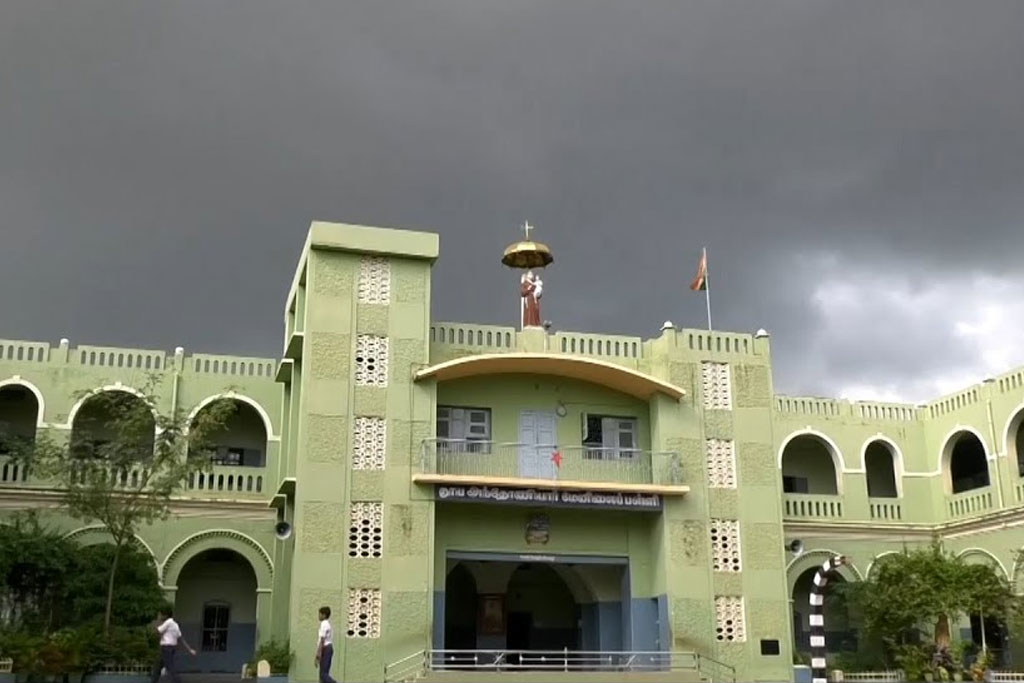
“The Catholic Mission’s Enduring Gift to Thanjavur”
By 1886, the Catholic missionary presence in Thanjavur had been growing steadily for two centuries, with Jesuit and later Capuchin priests working in the region since the 17th century. The founding of St. Antonys Higher Secondary School in 1886 represented the maturation of this missionary education effort — a transition from small parish schools and orphanage-based learning to a full-fledged, structured secondary school with ambitions of academic excellence.
Named after St. Anthony of Padua — the beloved Franciscan saint known as the patron of the poor and the lost — the school was conceived as a place of refuge and education for children from all backgrounds, with particular emphasis on those from lower-income families and historically marginalised communities. The Capuchin missionaries who ran the school in its early decades were known for their commitment to the poorest of the poor, and this ethos of inclusive education was embedded in St. Antonys from its very first day.
The late 19th century was a period of rapid change in Thanjavur. The British had fully consolidated control of the Madras Presidency. The railway had arrived, opening up the city to commerce and migration. New economic opportunities were emerging — but only for those with formal education. St. Antonys positioned itself as the gateway through which Thanjavur’s Catholic and non-Catholic students alike could access this new world of opportunity.
Over 139 years, St. Antonys has built a legendary reputation for academic rigour, discipline, and the all-round development of its students. Its alumni — spread across India, the Gulf, the United Kingdom, the United States, and Australia — regularly cite their Antonian education as the foundation of everything they achieved in life. The school has consistently produced strong board examination results and has an impressive record in sports, cultural competitions, and co-curricular activities.
The school’s continued operation under the Church’s management gives it a stability and continuity of vision that is rare — the same core values of faith, service, and intellectual excellence that guided its founders in 1886 continue to guide its teachers and students today.
7. Kalyana Sundram Higher Secondary School — Est. 1891 | Age: 134 Years
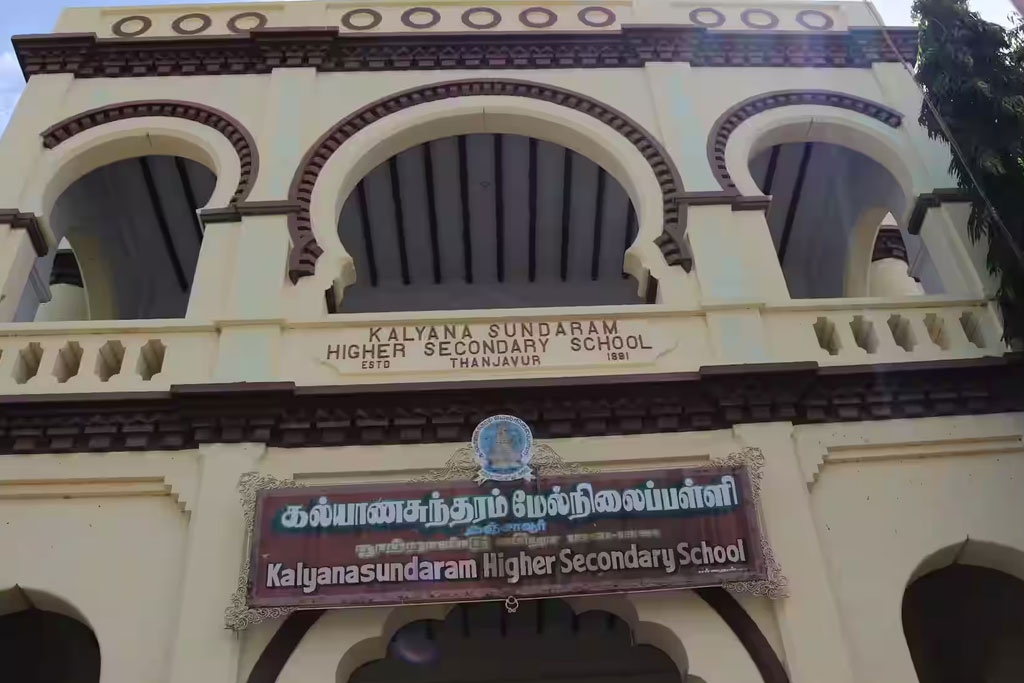
“Born of Tamil Philanthropy, Built to Last”
The founding of Kalyana Sundram Higher Secondary School on 16th April 1891 is one of the great stories of Tamil civic philanthropy. It was started on 16th April 1891, commonly called as K.H.S., founded by great personalities Gopalasamy Iyengar, K. Dharmarasa Iyengar and T.R. Arangasamy Iyengar. With the help and support of famous advocate and member of the Legislative Assembly, Kalyanasundaram Iyer, the school became government-aided.
This founding story is worth pausing on. Three respected members of the Thanjavur community — not missionaries, not colonial administrators, but Tamil scholars and community leaders — came together in 1891 with a shared conviction: that the sons of Thanjavur deserved a school that reflected their own cultural identity and intellectual tradition. They pooled their resources, negotiated government recognition, and created an institution that would go on to serve the community for over 134 years.
In 1927, the administration of the school was transferred to the Kalyanasundara Education Commission — a professional educational body that gave the school a governance structure capable of sustaining it through the turbulent decades of Independence, Partition, linguistic reorganisation, and the multiple waves of education policy reform that followed.
The name “Kalyana Sundram” — meaning “auspicious beauty” — reflects the aspirational vision of its founders: a school that would be beautiful not just architecturally, but in the beauty of the minds it shaped and the character it built. For 134 years, K.H.S. has been doing exactly that — sending generation after generation of young Thanjavurians into the world equipped with knowledge, discipline, and Tamil pride.
8. Don Bosco Matriculation Higher Secondary School — Est. 1906 / 1983 | Age: 119 Years (Roots)
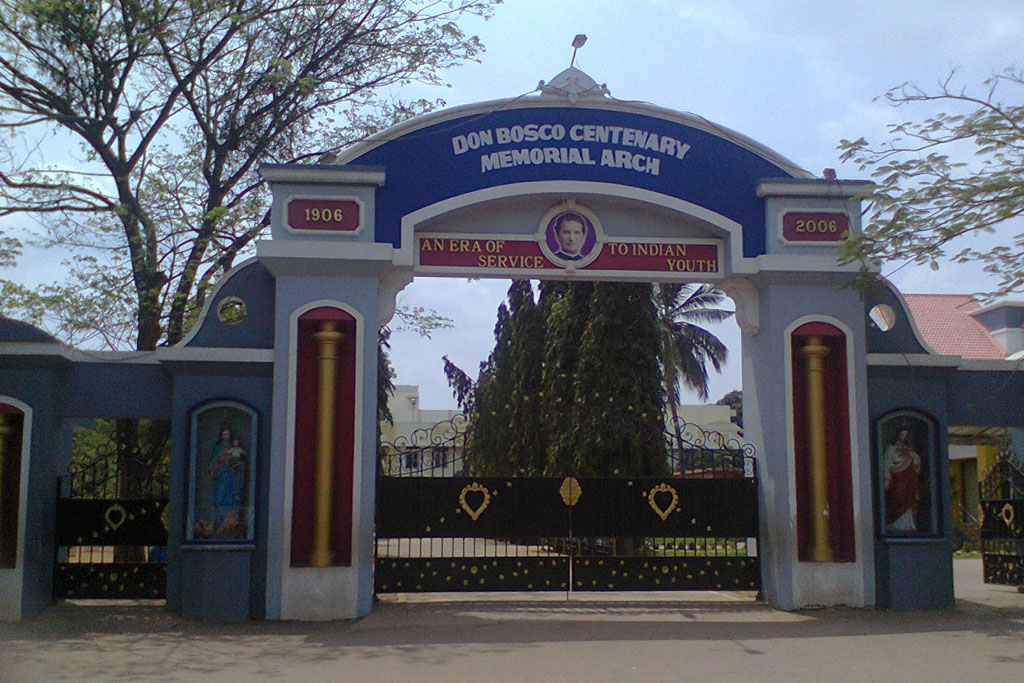
“The School That Came Back — Twice as Strong”
“First Don Bosco School in India”
The story of Don Bosco School, Thanjavur is unlike any other on this list. It is a story of arrival, departure, and triumphant return — a story that spans 119 years and reflects the extraordinary persistence of the Salesian mission.
The Salesians of Don Bosco first arrived in Thanjavur in 1906, led by Fr. George Tomatis. They took charge of an orphanage and started an Industrial school for the youth — teaching trades, crafts, and basic literacy to the city’s most vulnerable boys.
This Industrial School was a remarkable institution for its time. While most schools of the era focused on academic subjects for fee-paying students, Don Bosco’s Industrial School was designed specifically for boys with no other options — orphans, street children, the sons of daily-wage labourers. It taught carpentry, printing, tailoring, and other trades alongside basic literacy and moral education, giving these boys not just knowledge but a livelihood. In many ways, it was India’s first structured vocational education programme for marginalised youth.
However, they were unable to continue their mission in Thanjavur after 1928. They returned in the year 1983 to resume their mission in Thanjavur, establishing a Seminary for the youth and a High School conducting classes from 6th to 10th standard in 1983–84.
The return in 1983 was not a quiet affair — it was a full recommitment. The school was formally re-founded in 1983 and recognised under the code of regulations for Matriculation Schools, Tamil Nadu. It is a Catholic minority institution run by the South Indian Salesian Society.
From that restart, the growth was steady and purposeful. A primary school named “Dominic Savio” was established in 1985–86. A new building was constructed in 1987. The Higher Secondary course was introduced in 1994–95, and the first batch passed out in 1996.
The school celebrated its Silver Jubilee on 24 January 2008, and the Centenary Memorial Hall was inaugurated on 6 February 2006 by Rev. Fr. Pascual Chavez, Rector Major of the Salesians — marking a century since the Salesians first arrived in Thanjavur.
Don Bosco, Thanjavur today caters to 1,800 students with a team of 61 teaching staff and 20 non-teaching staff. The school has active student clubs covering Cultural, Eco-friendly, Human Rights, JRC, YCS/YSM, Music and Media activities — a rich tapestry of extra-curricular life that reflects the Salesian conviction that the whole person, not just the academic student, must be developed.
The guiding spirit of the school is its founder, St. John Bosco — an Italian Roman Catholic priest born on August 16, 1815, who at the age of nine had a dream calling him to dedicate himself to the education of young people. His life’s programme was “Da mihi animas cetera tolle” — “Give me souls, take all the rest.” That motto has guided everything Don Bosco Thanjavur has done for 119 years — interrupted but never extinguished.
9. Sacred Heart Girls’ Higher Secondary School — Est. 1937 | Age: 88 Years
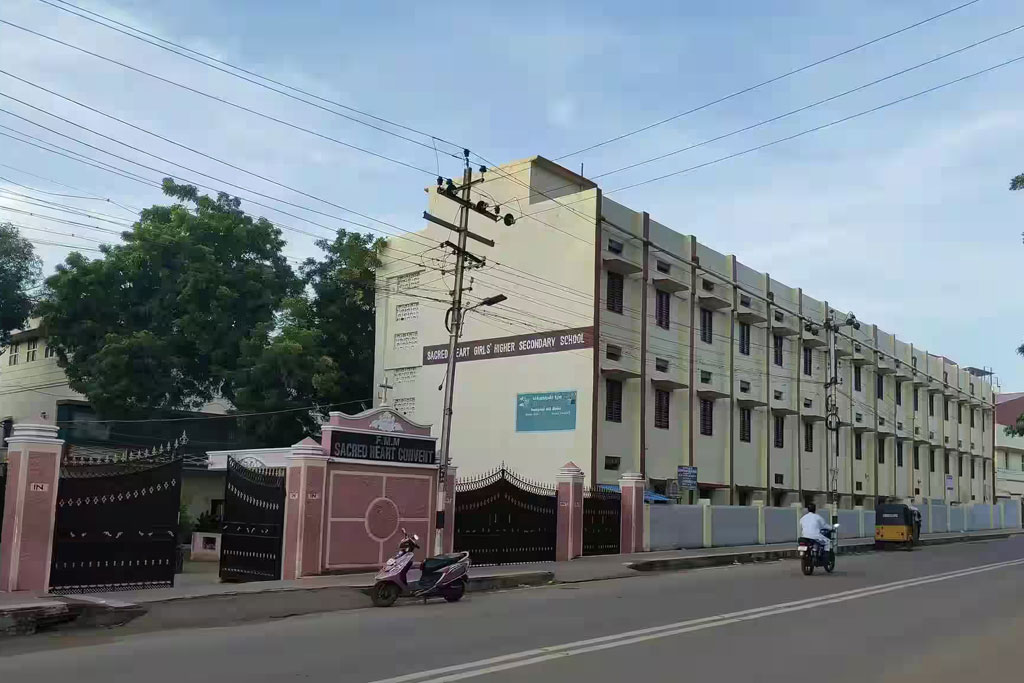
“Courage in a Sari — Education as Liberation”
The founding of Sacred Heart Girls’ Higher Secondary School in 1937 — just a decade before Indian Independence — carries a particular kind of moral courage that is difficult to fully appreciate from the vantage point of 2025. To establish a school exclusively for girls from the most socially and economically disadvantaged backgrounds, in a city where gender discrimination was embedded in virtually every social institution, was an act of quiet defiance that changed thousands of lives.
The Sacred Heart Girls Higher Secondary School in Thanjavur is administered by the Franciscan Missionaries of Mary under the Roman Catholic Diocese of Thanjavur. The school was founded in the year 1937 with the primary objective of serving the poor and the sick, socially backward and needy students irrespective of caste, creed, and religion. The motto of the school is “Towards Truth and Charity.”
The Franciscan Missionaries of Mary — the first International Religious Congregation for Women — was founded in 1877 by Mary of the Passion (Helen-de-Chappotin) at Ootacamund, Tamil Nadu. Their mission is to discover Christ’s message of love through prayer and service, with a preference for working with the poor and the marginalised to create a more just and humane society.
When the FMM sisters arrived in Thanjavur in the 1930s, they found a city where girls’ education existed but remained largely a privilege of upper-caste and Christian families. The girls of poor Hindu, Muslim, and lower-caste Christian families had almost no access to quality secondary education. Sacred Heart was built precisely for these girls — the ones no other school was truly designed to serve.
The school today offers education from Kindergarten through Higher Secondary, with co-educational teaching in Kindergarten and Primary sections, and a girls-only High School and Higher Secondary. Instruction is offered in both Tamil and English — ensuring that language is never a barrier to access. The institution has built a remarkable record in academics, sports, and social service over its 88 years, and its students regularly top district examinations.
Approaching its centenary in 2037, Sacred Heart is one of Thanjavur’s most beloved institutions — a school where the daughters of fishermen and farmers sit alongside the daughters of teachers and doctors, united by the founding conviction that every girl deserves to be seen, taught, and celebrated.
10. E. D. Thomas Memorial Higher Secondary School — Est. 1953 | Age: 73 Years
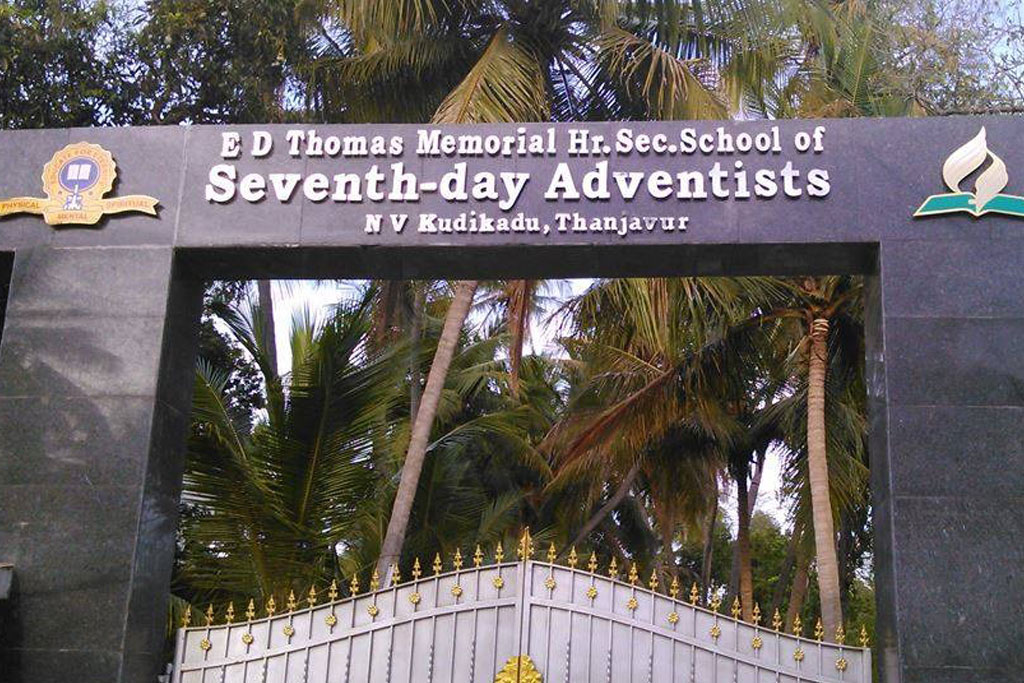
“Education with Purpose — Knowledge with Compassion”
The story of ED Thomas Memorial Higher Secondary School in Thanjavur is one rooted in vision, service, and a deep commitment to shaping young minds beyond the boundaries of privilege. Founded in memory of E.D. Thomas, the institution stands as a tribute not merely to an individual, but to an enduring belief — that education is the most powerful instrument for social transformation.
Nestled about 12 km from Thanjavur in Kudikadu, this school carries one of the most remarkable origin stories among all schools in the district. Its roots go back to 1909, when a humble school with just 35 students was founded in Prakasapuram, Tirunelveli, by Adventist pioneer Pastor J. S. James — making it one of the earliest mission schools in South India.
Edward Duraiswamy Thomas — one of the first two national Seventh-day Adventist ministers in the Southern Asia Division to be ordained — served the church as teacher, translator, editor, evangelist, and conference administrator. He led that original school for over a decade and gave 44 years of tireless service to the Adventist mission in Tamil Nadu.
In November 1950, the Division Committee authorized the South India Union to purchase 63 acres near Tanjore for the relocation of the Tamil High School. The school was renamed the “E. D. Thomas Memorial High School” in honor of the pioneer, who had passed away in 1952 while the buildings were being constructed. The school re-opened in Kudikadu near Tanjore on July 30, 1953.
E. D. Thomas Memorial Higher Secondary School is situated about 12 km from Thanjavur on 52 acres of land, with physics, chemistry, and biology laboratories, a library, and dedicated boys’ and girls’ hostels. It is part of the Seventh-day Adventist education system — the world’s second largest Christian school system.
Today, the school stands not just as an educational institution, but as a living tribute to a pioneering son of Tamil Nadu who helped shape the Adventist church in all of South India.
The Complete Master Timeline
| # | Institution | Founded | Age (2025) | Founded By |
| 1 | St. Peters Higher Secondary School | 1784 | 241 yrs | Rev. F.C. Schwartz |
| 2 | Blake (C.S.I.) Higher Secondary School | 1786 | 239 yrs | Protestant Missionaries |
| 3 | Serfoji’s Royal Free School | 1803 | 222 yrs | King Serfoji II |
| 4 | Girls Christian Higher Secondary School | 1856 | 169 yrs | Protestant Mission Women |
| 5 | Veera Ragava Higher Secondary School | 1857 | 168 yrs | Tamil Philanthropists |
| 6 | St. Antonys Higher Secondary School | 1886 | 139 yrs | Catholic Missionaries |
| 7 | Kalyana Sundram Higher Secondary School | 1891 | 134 yrs | Gopalasamy & Kalyanasundaram Iyer |
| 8 | Don Bosco (Industrial School / Matric HSS) | 1906/1983 | 119 yrs | Salesians of Don Bosco |
| 9 | Sacred Heart Girls’ Higher Secondary School | 1937 | 88 yrs | Franciscan Missionaries of Mary |
| 10 | ED Thomas Memorial Higher Secondary School | 1953 | 77 yrs | The Seventh-day Adventist |
What These Schools Tell Us About Thanjavur
Look at this list carefully and a profound story emerges.
Thanjavur’s educational heritage is not the story of one religion, one community, or one ideology. It is the story of multiple streams of compassion converging on the same conviction: that the children of this city — all of them, regardless of caste, gender, faith, or economic background — deserve to be educated.
Danish missionaries brought English literacy to Tamil children in 1784. A Maratha king opened the first free multi-caste school in 1803. Protestant women broke the gender barrier in 1856. Tamil community leaders built institutions in their own language and tradition in 1857 and 1891. Catholic missionaries brought industrial training to orphaned boys in 1906. Salesian brothers returned from a 55-year absence to restart their mission in 1983. Franciscan sisters built a sanctuary for girls from the margins in 1937.
Each of these acts was, in its time, a form of resistance — against ignorance, against caste discrimination, against gender oppression, against colonial cultural erasure, against poverty. Together they have created an educational ecosystem in Thanjavur that is as layered, rich, and enduring as the city’s temples and music.
The Brihadeeswara Temple teaches us that Thanjavur builds things to last. These schools — some of them older than the temple itself in their unbroken educational service — teach us the same lesson, in chalk and ink rather than granite and gold.
Thanjavur — Where Every Stone Is a Classroom, and Every School Is a Temple.