
Discover the Ancient Temples That Existed Centuries Before the 1,000-Year-Old Wonder
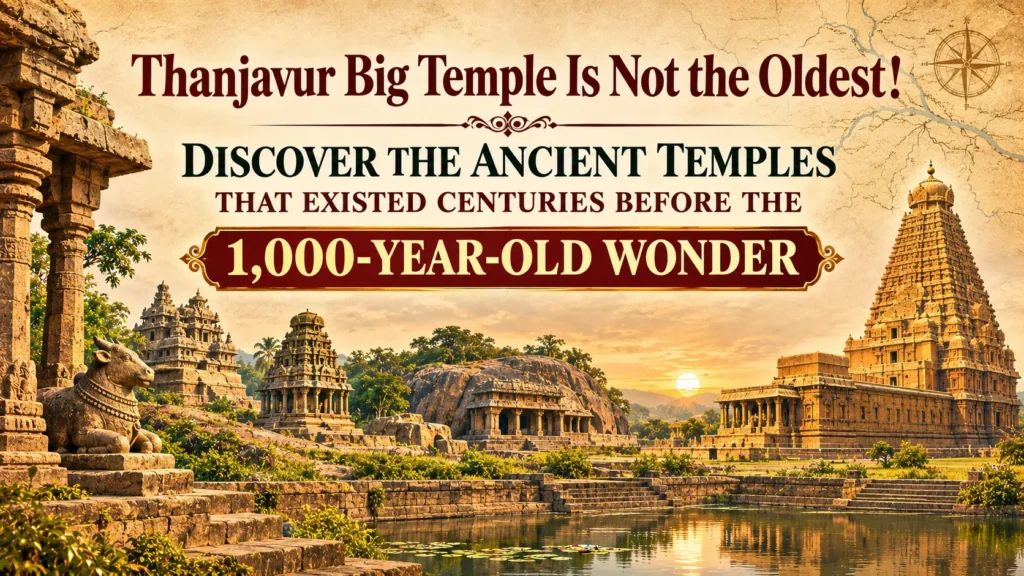
Thanjavur Big Temple Is Not the Oldest! Discover the Ancient Temples That Existed Centuries Before the 1,000-Year-Old Wonder
For more than a thousand years, the magnificent Brihadisvara Temple of Thanjavur has stood as a symbol of Tamil civilisation, Chola greatness and extraordinary architectural achievement. Built by the great Chola emperor Raja Raja Chola I and consecrated around 1010 CE, the temple is one of India’s most celebrated historical monuments and a UNESCO World Heritage Site.
It is popularly known as the Thanjavur Big Temple.
But what if we told you that the history of temples in and around Thanjavur goes back several centuries before this magnificent monument was built?
What if the region already had rock-cut cave temples, ancient Shiva shrines, Jain monuments and early structural temples when Raja Raja Chola began planning his architectural masterpiece?
And what if one of the most important historical references to the establishment of Chola power in Thanjavur was connected not to the Big Temple, but to a goddess called Nisumbhasudani?
The truth is that the Big Temple represents the magnificent culmination of an architectural tradition that had developed over several centuries.
From the ancient cave temples of Malaiyadipatti and Kudumiyanmalai to the early Chola temples of Pullamangai and Kumbakonam, the wider Kaveri region preserves an extraordinary heritage that deserves much greater recognition.
Here are some of the ancient temples and sacred monuments that existed before the construction of the Thanjavur Big Temple.
-
The Temple History of Thanjavur Began Before Raja Raja Chola
To understand this history, we need to go back to the seventh, eighth and ninth centuries.
Long before Raja Raja Chola I became one of the most powerful rulers in South Indian history, the region around Thanjavur was already an important centre of religious activity and temple construction.
Different dynasties and local rulers contributed to this development.
Among them were:
- Pallavas: Known for their pioneering rock-cut cave temples and early structural architecture.
- Pandyas: Important patrons of rock-cut shrines and religious monuments in southern Tamil Nadu.
- Mutharaiyars: Local chiefs who controlled important parts of the Kaveri region and supported temple construction.
- Early Cholas: Rulers who developed the foundations of the architectural tradition that later reached its greatest expression under Raja Raja Chola I.
The rise of Vijayalaya Chola around the middle of the ninth century marked a major turning point in the political history of Thanjavur.
However, the temples and religious monuments of the surrounding region were already much older.
The important distinction is that some monuments preserve early rock-cut structures, while others have ancient religious traditions but surviving buildings from later periods.
Understanding this difference helps us discover the real age of Tamil Nadu’s temple heritage.
-
Kudumiyanmalai – An Ancient Rock-Cut Temple with a Musical Treasure
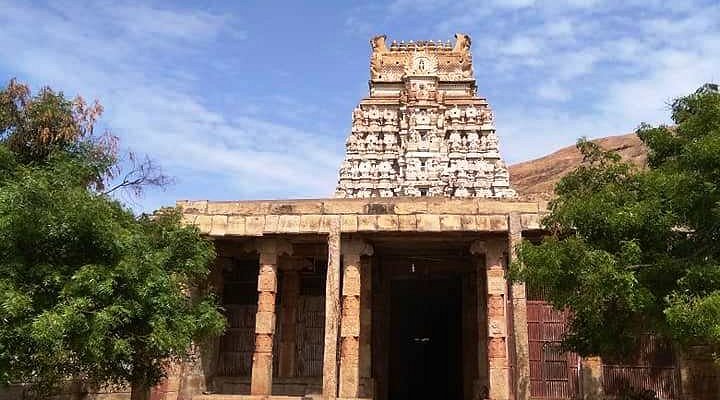
7th–8th century architectural tradition
Location: Kudumiyanmalai, Pudukkottai district.
One of the most fascinating ancient temple sites in the wider Thanjavur region is Kudumiyanmalai.
The hill is home to the famous Sikkanathar Temple complex and an earlier rock-cut shrine known as Melakkovil.
Its importance extends beyond religious history. It preserves one of the most remarkable musical inscriptions in South India.
The famous musical inscription
On the rock near the cave temple is an inscription containing musical notation and instructions relating to classical music.
The inscription is written in Sanskrit using Grantha characters and is divided into several sections.
It is commonly associated with the early medieval period, although its precise date and patronage have been debated by scholars.
The inscription is particularly important because it provides evidence of the development of musical theory and the relationship between music and temple culture in ancient Tamil Nadu.
The Pudukkottai district administration also recognises Kudumiyanmalai for its ancient cave temples and remarkable musical inscription.
India+2
Why is Kudumiyanmalai important?
It demonstrates that religious architecture, music, sculpture and scholarly traditions were flourishing in the region centuries before the construction of the Big Temple.
The monument is not simply an old temple. It is an important historical record of the cultural sophistication of early medieval South India.
-
Tirumayam – Ancient Shiva and Vishnu Cave Temples
7th–8th century architectural tradition
Location: Tirumayam, Pudukkottai district.
Tirumayam is another important historical destination that deserves a place in the story of ancient temples around Thanjavur.
The site is famous for its rock-cut cave temples dedicated to Shiva and Vishnu.
The Shiva shrine is associated with Sathyagirisvara, while the Vishnu shrine is associated with Satyamurthy Perumal.
A remarkable example of early cave architecture
Unlike the enormous structural temples of the later Chola period, these shrines were excavated directly into natural rock.
Their sanctums, sculptural arrangements and cave interiors reveal an earlier stage in the evolution of South Indian temple architecture.
The wider Tirumayam region also contains fortifications and other historical structures.
The Pudukkottai region is especially important for understanding the relationship between early Pandya and Pallava architectural traditions.
Historical studies generally place the cave shrines in the early medieval period, although exact dating of individual architectural phases requires care.
TeePublic+1
Why should we remember Tirumayam?
Because it shows that the architectural history of Tamil Nadu did not begin with the construction of large granite temples.
Before monumental vimanas became a defining feature of Chola architecture, craftsmen were already developing impressive rock-cut sanctuaries.
-
Sittannavasal – An Ancient Jain Heritage Site with Extraordinary Paintings
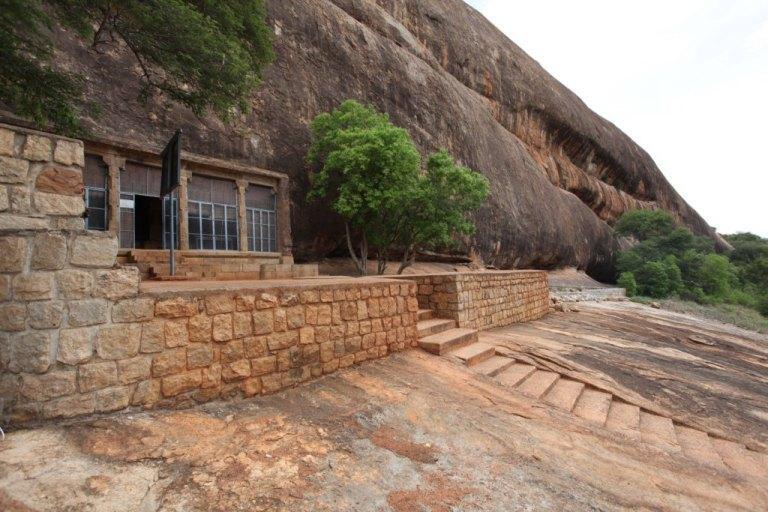
Early medieval heritage
Location: Sittannavasal, Pudukkottai district.
Not every ancient religious monument in the Thanjavur region belongs to the Hindu temple tradition.
Sittannavasal is one of the most important Jain heritage sites in Tamil Nadu.
Its famous cave shrine, known as Arivar Koil, is celebrated for its ancient mural paintings and religious significance.
The famous paintings
The cave contains remarkable paintings depicting a lotus pond, flowers, aquatic life and human figures.
These paintings are especially important for understanding the artistic traditions of early medieval Tamil Nadu.
The site also contains Jain ascetic beds and ancient Tamil-Brahmi inscriptions in the surrounding rock shelters.
The Archaeological Survey of India maintains Sittannavasal as a monument of national importance. A Ministry of Culture report published in December 2025 identifies the cave temple as a seventh-to-ninth-century monument and highlights its rare early mural paintings.
Press Information Bureau+1
Why is Sittannavasal important?
It reminds us that the religious history of the Thanjavur–Pudukkottai region was diverse.
Shaivism, Vaishnavism and Jainism all contributed to the cultural and artistic development of this part of Tamil Nadu.
The site is therefore an important part of the wider heritage story, even though it is not a conventional Hindu temple.
-
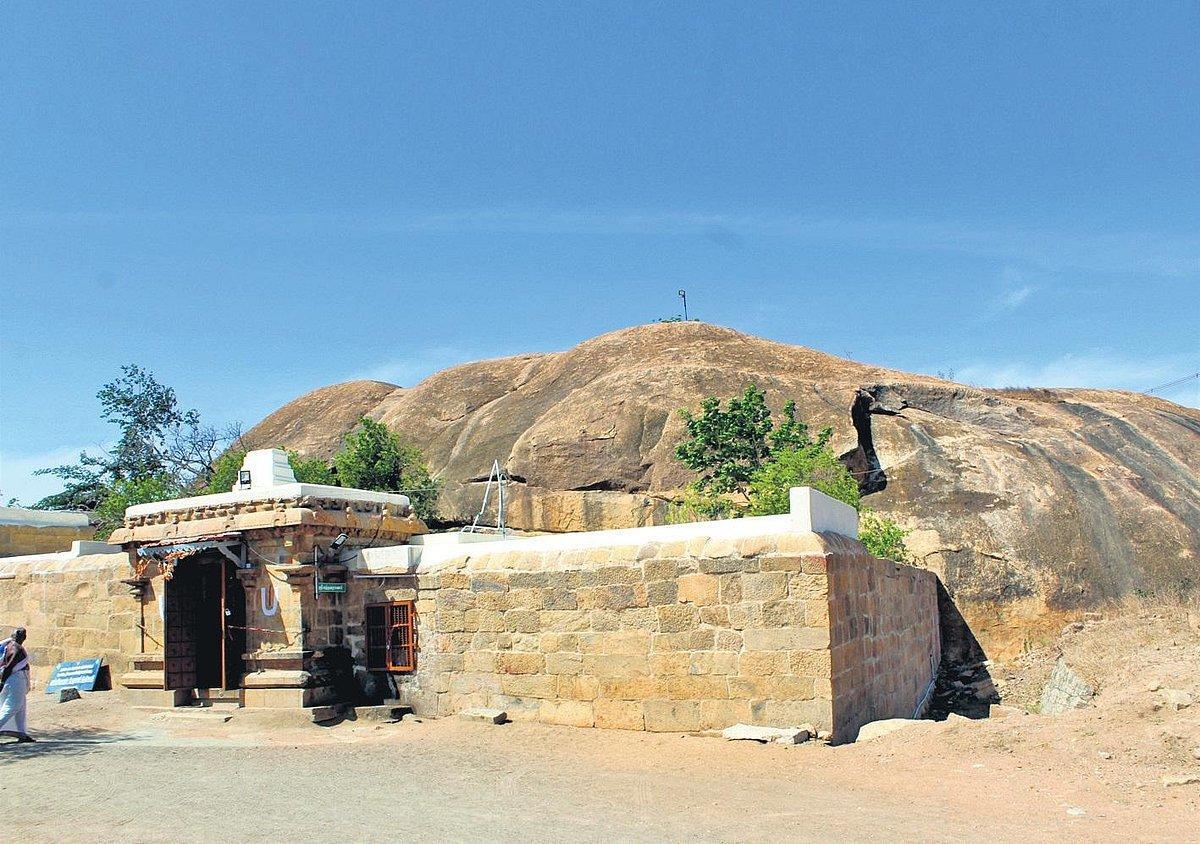
Malaiyadipatti – Two Ancient Cave Temples with Historical Inscriptions
Early 9th century
Location: Malaiyadipatti, Pudukkottai district.
Among all the monuments discussed in this article, Malaiyadipatti deserves special attention because its history is supported by an important foundation inscription.
The village contains two remarkable rock-cut cave temples:
- Vagisvara Shiva Cave Temple.
- Olipathi Vishnu Cave Temple.
These monuments provide valuable evidence of the religious and architectural activities of the Mutharaiyar chiefs during the Pallava period.
The Shiva Cave Temple and Kuvavan Sathan
The Shiva cave temple has an inscription recording its excavation by a Mutharaiyar chief known as Videlvidugu Muttaraiyan, also called Kuvavan Sathan.
The inscription is dated to the 16th regnal year of Pallava king Dantivarman.
It records that Kuvavan Sathan excavated the hill at Tiruvallattur as a temple and installed the deity.
This is particularly important because it gives us direct historical evidence of who established the shrine and under which Pallava ruler the work took place.
The inscription also records donations and arrangements for maintaining a perpetual lamp at the temple.
The digital epigraphical edition published by the DHARMA project provides a transcription and English translation of this inscription.
DHARMA+2
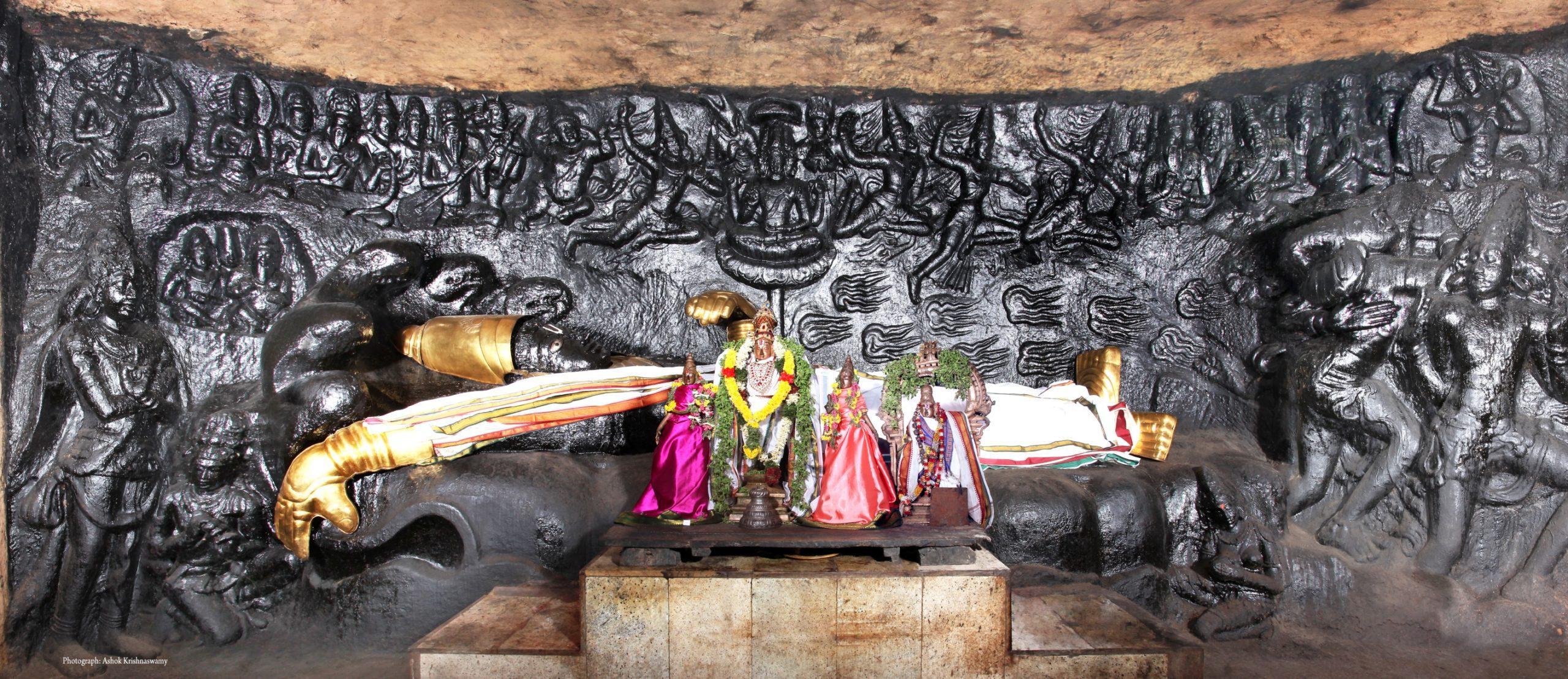
The Vishnu Cave Temple
The second cave is equally fascinating.
It is known by the ancient name Olipathi Vishnu Griham, which appears in an early Chola inscription.
Its most striking feature is the reclining form of Lord Vishnu.
The two caves therefore preserve an important combination of Shaivite and Vaishnavite traditions within the same historic settlement.
Why is Malaiyadipatti important?
The inscriptions establish that the temple-building activities here predate the Brihadisvara Temple by roughly two centuries.
They also reveal the contribution of the Mutharaiyars, a dynasty that played an important role in the political and cultural history of the region.
Malaiyadipatti is one of the strongest examples of why the temple history of the wider Thanjavur region must be studied beyond the famous Chola monuments.
-
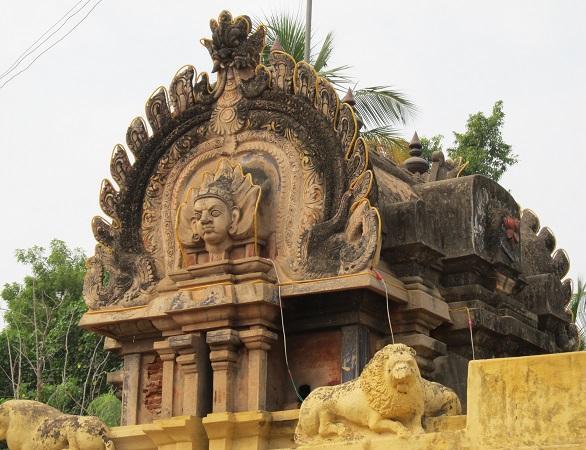
Vada Bhadra Kali Amman – The Goddess Connected with Vijayalaya Chola
9th-century Chola historical association
Location: Thanjavur city, Keezhavasal area.
This is perhaps the most interesting historical connection within Thanjavur city itself.
While most people associate the rise of Thanjavur with Raja Raja Chola and the Big Temple, the city’s earlier Chola history is closely connected with a powerful goddess known as Nisumbhasudani.
Who was Nisumbhasudani?
Nisumbhasudani is a fierce form of the Goddess Durga, associated with the destruction of the demon Nisumbha.
According to the historical tradition preserved in the Tiruvalangadu copper plates of Rajendra Chola I, Vijayalaya Chola captured the city of Tanjapuri (Thanjavur) and consecrated an image of Nisumbhasudani there.
The account is found in verse 46 of the Sanskrit portion of the copper-plate grant.
It connects the goddess with Vijayalaya’s victory and the establishment of Chola authority in Thanjavur.
The Thanjavur Corporation’s historical account also records Vijayalaya’s association with the establishment of a temple dedicated to Nisumbhasudani.
IGNCA+2
Is the present Vada Bhadra Kali Amman Temple the original Nisumbhasudani temple?
This requires an important historical clarification.
The copper plates establish that Vijayalaya consecrated Nisumbhasudani at Thanjavur. However, the original temple mentioned in the inscription has not been conclusively identified with the surviving structure of the present Vada Bhadra Kali Amman shrine.
Older archaeological literature even discusses the original Nisumbhasudani temple as no longer surviving and mentions other historic Kali shrines in Thanjavur.
Therefore, the connection is important and should be presented as a historical and devotional association rather than an established architectural identification.
Why is this story remarkable?
The Big Temple was built around 1010 CE.
But Vijayalaya’s association with Nisumbhasudani belongs to the ninth-century establishment of Chola power in Thanjavur.
That means the city’s Chola religious history reaches back well before Raja Raja Chola’s monumental temple.
It is a story that deserves far greater attention.
-
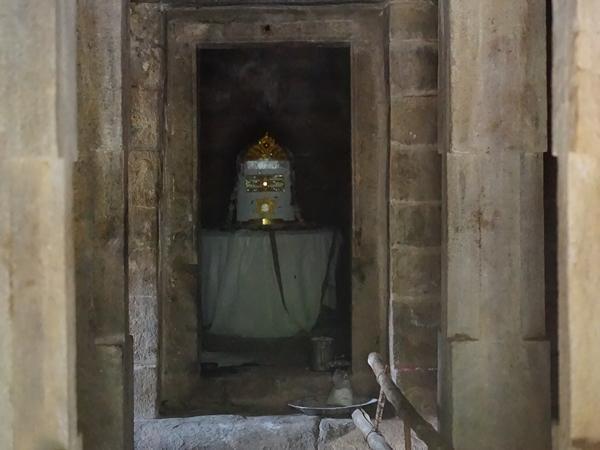
Paliyili Isvaram – A Cave Temple with an 862 CE Inscription
862 CE inscription
Location: Narthamalai, Pudukkottai district.
Narthamalai is one of the most historically important temple landscapes in the region.
Among its ancient monuments is Paliyili Isvaram, a rock-cut Shiva shrine.
Its historical importance comes from an inscription dated to 862 CE, during the seventh regnal year of Pallava king Nripatunga Varman.
The inscription records the work of Sattan Paliyili, the son of a Mutharaiyar chief, who constructed or adapted the cave shrine for Shiva. His wife is also associated with the construction of its front structural elements.
This inscription is an important piece of evidence for the relationship between the Pallavas and the Mutharaiyar chiefs.
It also demonstrates that temple construction in the region was already well established during the ninth century.
Ecoheritage+1
-
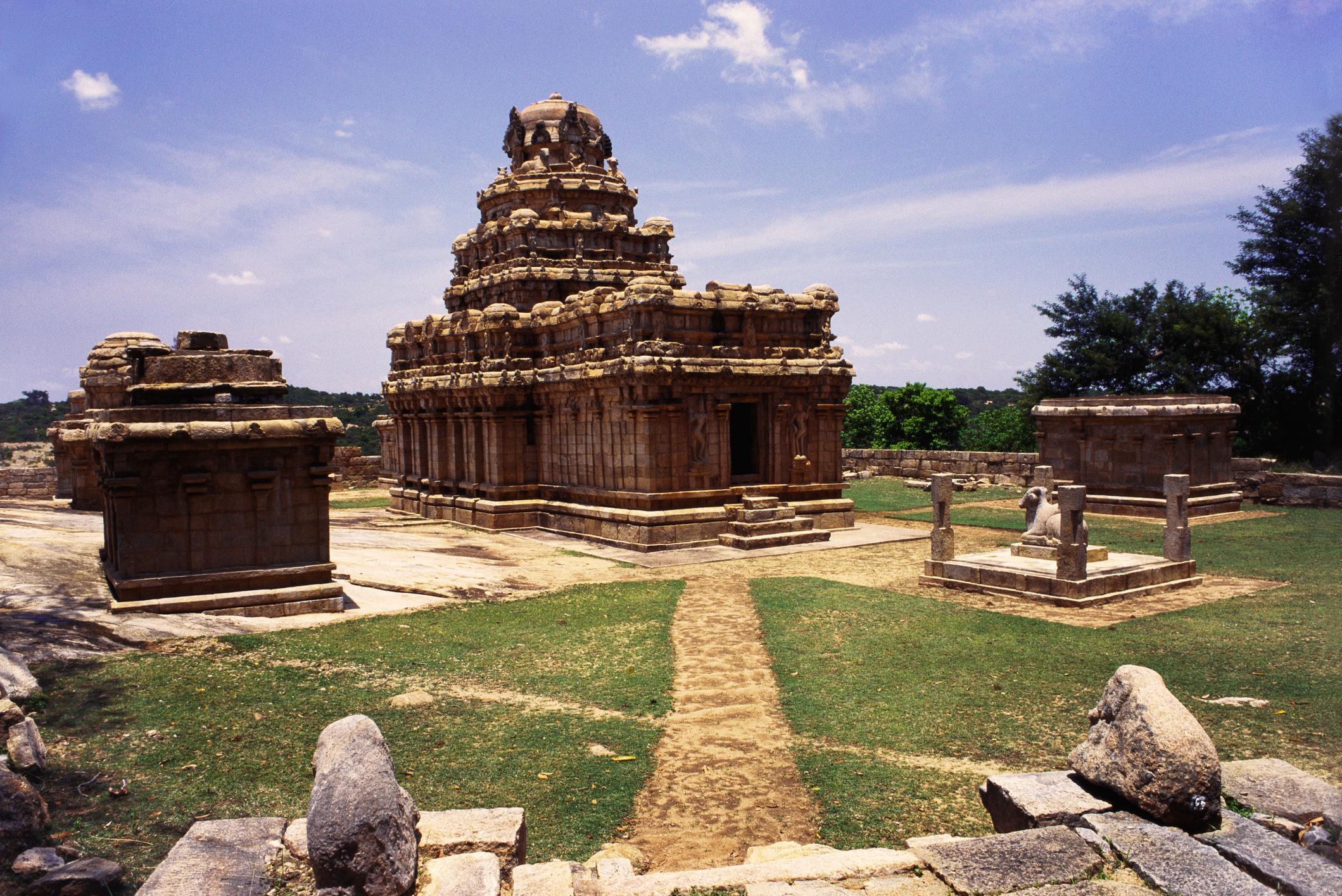
Vijayalaya Choleeswaram – The Temple of the Early Chola Dynasty
9th century
Location: Narthamalai, Pudukkottai district.
Vijayalaya Choleeswaram is one of the most important structural temples associated with the formative period of the medieval Chola dynasty.
Unlike the earlier rock-cut cave temples, this monument was constructed as a structural stone temple.
It is traditionally associated with Vijayalaya Chola, although the precise construction history and patronage should not be simplified into a single definitive building date.
An architectural landmark
The temple is known for its distinctive vimana and carefully planned shrine complex.
It is particularly important for understanding how the early Chola architectural tradition developed.
The temple’s smaller scale makes it very different from the enormous Brihadisvara Temple, but its historical value is considerable.
The CPREEC heritage documentation identifies it as an early structural temple associated with the Vijayalaya period.
Ecoheritage+1
-
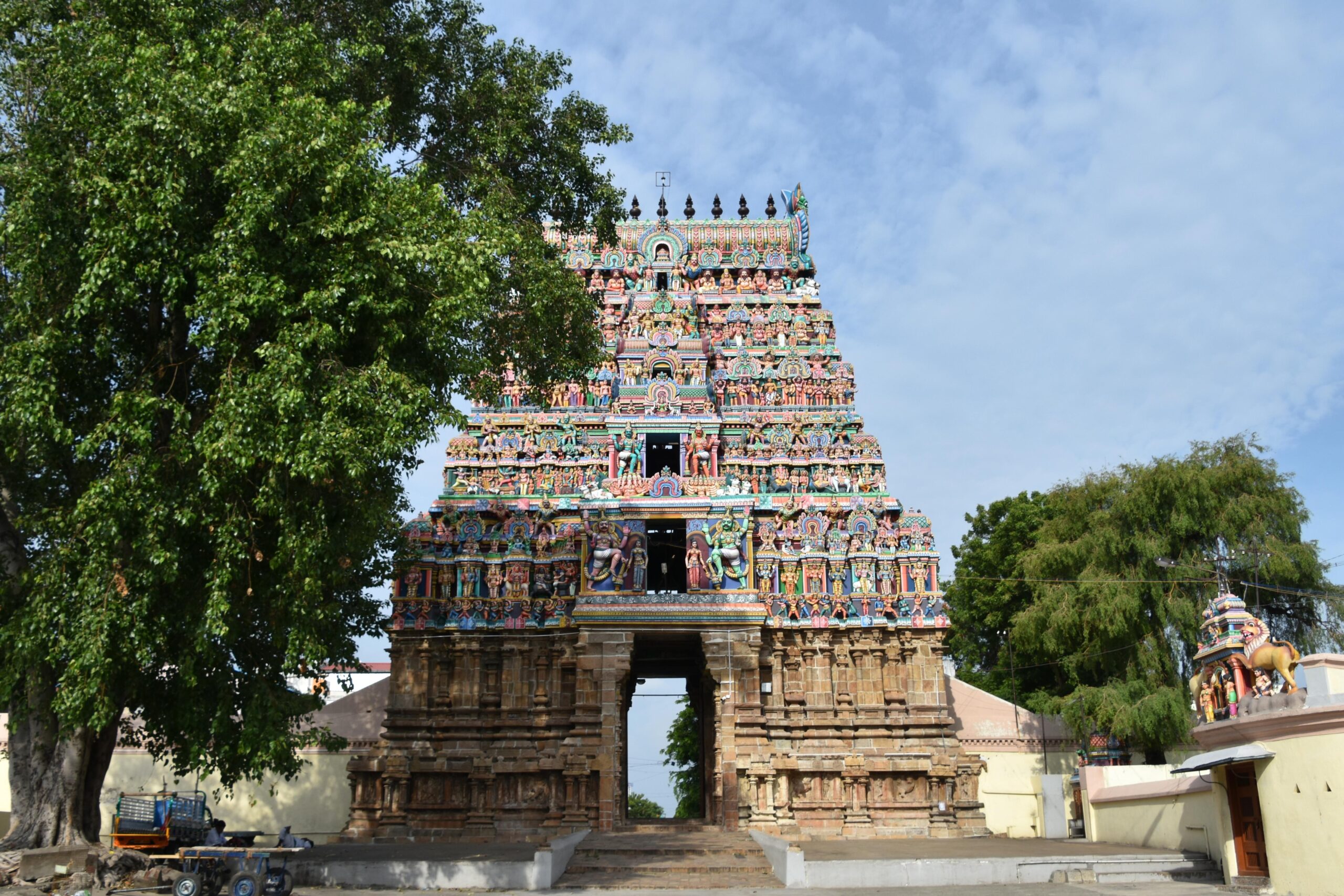
Nageswaran Temple, Kumbakonam – An Early Chola Masterpiece
9th–10th century
Location: Kumbakonam, Thanjavur district.
Kumbakonam is famous for its numerous temples, but the Nageswaran Temple holds a special place in the history of early Chola architecture.
Dedicated to Lord Shiva, the temple is associated with the reign of Aditya Chola I.
Its stone architecture, sculptural decorations and inscriptions reveal the development of temple construction before the imperial Chola period.
The architectural historian S. R. Balasubrahmanyam identifies Nageswaran among the important early Chola temples.
Its historical importance is especially clear when compared with the later Brihadisvara Temple.
The smaller Nageswaran shrine represents an earlier architectural phase, while the Big Temple represents the monumental culmination of that tradition.
-
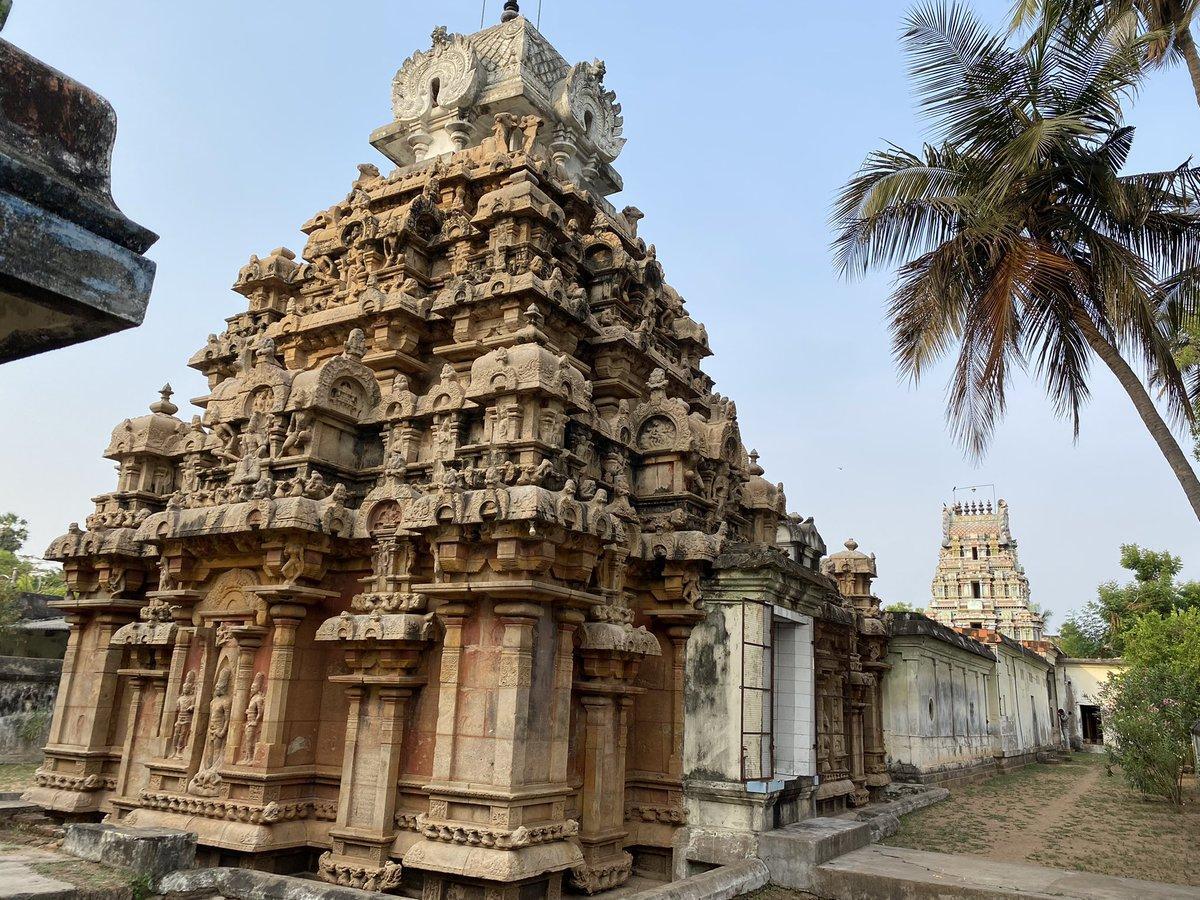
Brahmapureeswarar Temple, Pullamangai – The Sculptural Brilliance of Early Chola Art
10th century
Location: Pullamangai, near Pasupathikoil, Thanjavur district.
The Brahmapureeswarar Temple at Pullamangai is one of the finest examples of early Chola architecture in the Thanjavur region.
Also associated with the name Tiru Alandurai Mahadevar, this temple is especially famous for its intricate sculptures.
Its architecture is generally associated with the reign of Parantaka Chola I.
A treasure of stone sculpture
The temple contains beautifully carved figures and miniature panels depicting Hindu deities and mythological stories.
The sculptures demonstrate an extraordinary level of artistic skill.
The early Chola sculptors had developed a sophisticated understanding of proportions, expressions, ornamentation and narrative representation.
The historical study Early Chola Temples by S. R. Balasubrahmanyam identifies Pullamangai as an important monument of the Parantaka I period.
Wisdom Library+1
Why is it important?
It demonstrates that the sculptural traditions seen in the Big Temple were not developed overnight.
They were the result of generations of artistic development.
Pullamangai is therefore one of the most valuable monuments for understanding the origins of Chola artistic excellence.
-
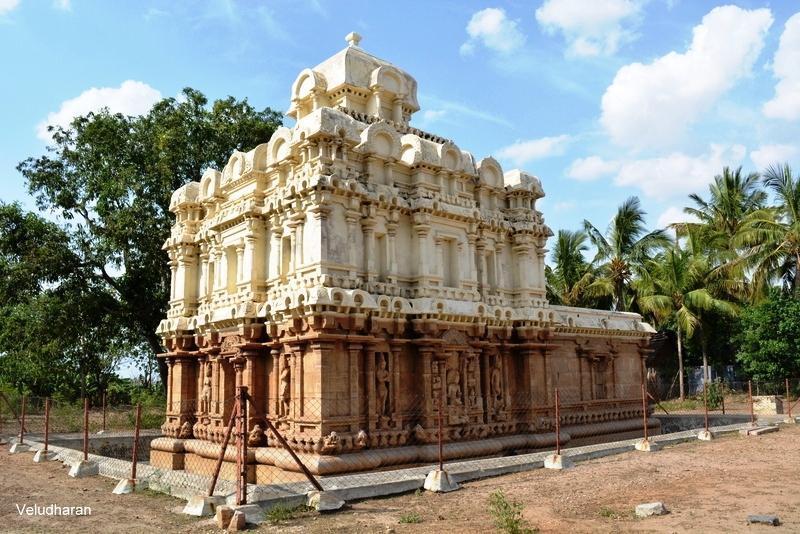
Koranganatha Temple, Srinivasanallur – An Important Step Towards Monumental Chola Architecture
Early Chola period
Location: Srinivasanallur, Tiruchirappalli district.
Although Srinivasanallur is outside the present Thanjavur district, its temple is important to the wider history of Chola architecture.
The Koranganatha Temple is known for its early structural stone construction and distinctive architectural features.
One of its most interesting characteristics is the double-storeyed sanctum arrangement.
Architectural historians have discussed this feature as an important precedent in the development of later Chola temple architecture, including the Brihadisvara Temple.
The monument demonstrates how early Chola builders developed increasingly sophisticated structural forms before the construction of the great imperial temples.
Wisdom Library+1
-
What Came Before the Big Temple? A Historical Timeline
The following timeline brings together the important monuments discussed in this article.
| Period / date | Temple or monument | Location |
| 7th–8th century | Kudumiyanmalai Melakkovil | Pudukkottai |
| 7th–8th century | Tirumayam Shiva and Vishnu caves | Pudukkottai |
| 7th–9th century | Sittannavasal Arivar Koil | Pudukkottai |
| Early 9th century | Malaiyadipatti Shiva Cave | Pudukkottai |
| Early medieval period | Malaiyadipatti Vishnu Cave | Pudukkottai |
| 9th century | Vijayalaya’s Nisumbhasudani consecration | Thanjavur |
| 862 CE | Paliyili Isvaram inscription | Narthamalai |
| 9th century | Vijayalaya Choleeswaram | Narthamalai |
| 9th–10th century | Nageswaran Temple | Kumbakonam |
| 10th century | Brahmapureeswarar Temple | Pullamangai |
| Early Chola period | Koranganatha Temple | Srinivasanallur |
| 1003–1010 CE | Brihadisvara Temple | Thanjavur |
This is an approximate historical timeline, not a definitive archaeological ranking. Some entries are dated by inscriptions, while others are assigned to broad architectural periods. The dates of the earliest shrine and the surviving structure may differ.
-
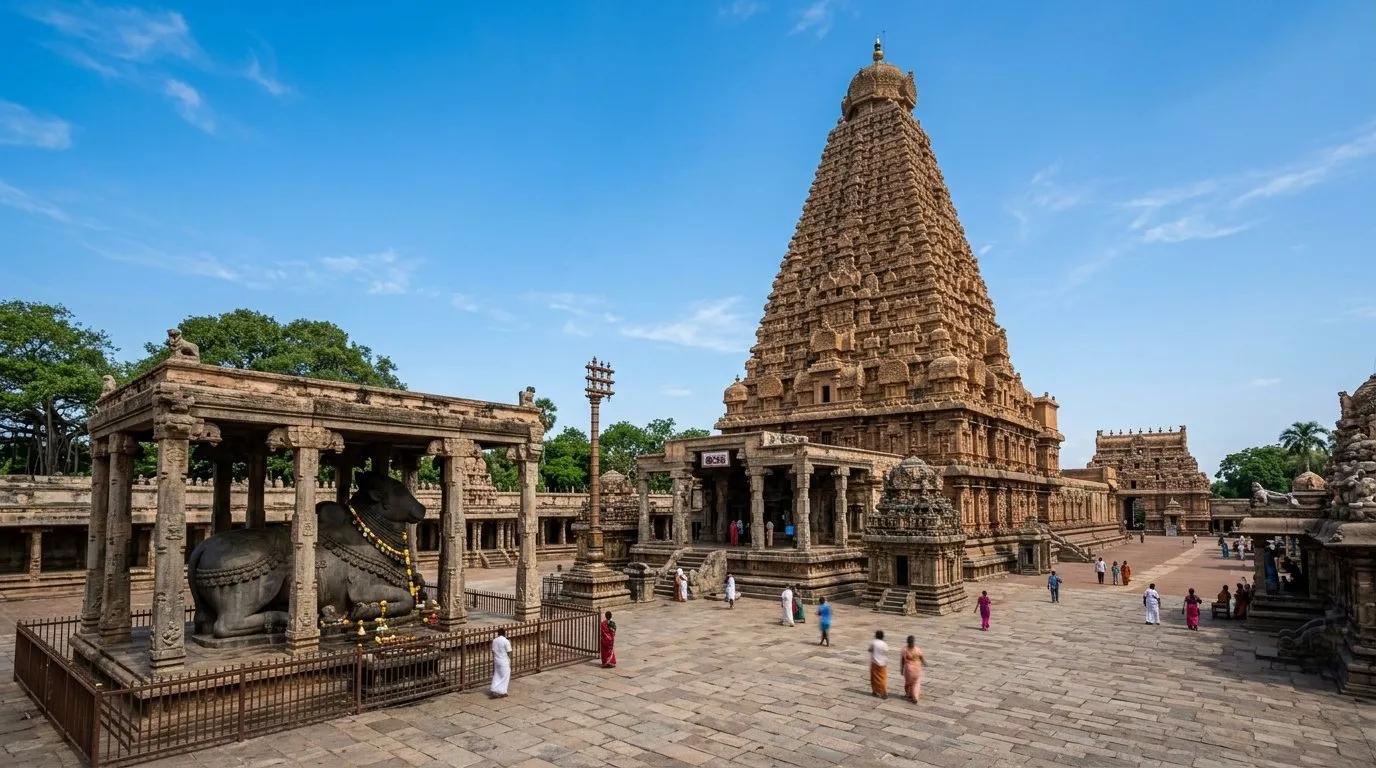
Why Did Raja Raja Chola Build Such a Monumental Temple?
After exploring these older monuments, an important question remains.
If ancient temples already existed throughout the region, why did Raja Raja Chola build such an enormous temple in Thanjavur?
The answer lies in the political, religious and artistic ambitions of the Chola Empire.
By the late tenth and early eleventh centuries, the Cholas had become one of the most powerful political forces in South India.
Raja Raja Chola wanted a monument that would express the power of his kingdom, the greatness of his reign and his devotion to Lord Shiva.
Construction of the Brihadisvara Temple began around 1003–1004 CE, and it was consecrated in 1009–1010 CE.
Its monumental vimana, granite construction, sculptures, bronzes and extensive inscriptions made it an extraordinary achievement.
UNESCO describes the temple as the greatest achievement of Chola architects and identifies it as the first great example of the high Chola architectural tradition.
UNESCO World Heritage Centre+1
The Big Temple did not begin the story of Chola architecture.
It brought earlier traditions to an extraordinary new level.
-
The Forgotten Heritage of Thanjavur’s Surrounding Villages
One of the biggest problems in heritage tourism is that visitors often concentrate on famous monuments and overlook the smaller historical sites around them.
Thousands of visitors travel to the Thanjavur Big Temple every year.
But how many travel to Pullamangai to appreciate its miniature sculptures?
How many explore the caves of Malaiyadipatti and read the inscriptions of the Mutharaiyar chiefs?
How many know about the musical inscription at Kudumiyanmalai?
How many recognise the importance of Vijayalaya’s Nisumbhasudani connection in the history of Thanjavur?
These places deserve more attention.
They are not simply smaller temples.
They are historical records of the people, rulers, artists, religious communities and architectural traditions that shaped this region.
A stronger heritage tourism approach could connect these monuments through historical circuits, information boards, local guides, conservation programmes and digital documentation.
Thanjavur’s history should not be limited to one famous monument.
It should be understood through the entire landscape of ancient temples and settlements.
Conclusion: The Big Temple Is Only One Chapter in a Much Older Story
The Brihadisvara Temple will always remain one of the greatest architectural achievements of Tamil civilisation.
Its monumental scale, engineering, inscriptions and artistic excellence make it an extraordinary treasure.
But the history of temple construction in and around Thanjavur began centuries before Raja Raja Chola.
The cave temples of Kudumiyanmalai, Tirumayam and Malaiyadipatti, the Jain heritage of Sittannavasal, the historical association of Nisumbhasudani with Vijayalaya Chola, and the early structural temples of Narthamalai, Kumbakonam and Pullamangai reveal a much older cultural landscape.
They tell us that the Big Temple was not an isolated miracle.
It was the culmination of generations of religious devotion, architectural experimentation, sculptural excellence and royal patronage.
The next time you visit the Thanjavur Big Temple, remember that the region’s history does not begin with its towering vimana.
Some of its oldest stories are hidden in quiet villages, ancient rock-cut caves and smaller shrines that have stood through centuries of change.
Thanjavur is not just the home of a 1,000-year-old temple. It is the heart of a much older temple civilisation.
Research sources and historical references
The following sources are especially useful for editorial verification and further reading:
- DHARMA – Malaiyadipatti Pallava Inscription — Primary inscription and English translation identifying Kuvavan Sathan.
- Tamil Nadu History Congress – Epigraphical Study of the Two Cave Temples at Malaiyadipatti — Research on both cave temples and their inscriptions.
- CPREEC – Narthamalai Cave Temples — History of Paliyili Isvaram and Vijayalaya Choleeswaram.
- Pudukkottai District Administration – Kudumiyanmalai — Government information on the temple and musical inscription.
- Ministry of Culture – Historical Importance of Sittannavasal — ASI heritage and mural paintings.
- IGNCA – The Great Temple at Tanjore — Historical discussion of Vijayalaya and the Nisumbhasudani inscription.
- Thanjavur Corporation – History of Thanjavur — Vijayalaya’s conquest of Thanjavur and the establishment of Chola rule.
- S. R. Balasubrahmanyam – Early Chola Temples — Early Chola architecture and the temples of Aditya I.
- UNESCO – Great Living Chola Temples — Official historical details about the Big Temple.